Wednesday, December 4, 2013

3 Reasons Why We Gave Access to Everyone

[caption id="" align="aligncenter" width="437"] http://discoveryourpowerteam.com/wp-content/uploads/2010/08/keys-colour-in-a-circle-817549_73710812.jpg[/caption]

Today, we gave every staff member access to our school's Twitter account.

This could be a little jarring for those who are worried about what might go wrong. But after all, they have keys to the school building and they are with children all day.  Surely teachers can handle access to a school-wide account.

What's funny is that when my principal and I established our school's social media accounts during the summer, we kept the passwords secret and in a protected file. The whole purpose behind creating these accounts was to help our school get our story out there for everyone to see.  How was that going to happen when only two people had access to the accounts? 

But really, this goes beyond letting everyone access -- It addresses 3 big reasons why teachers need to be connected.

1. On-going Professional Learning -- Those of us who have connected to Twitter know that one of the best things about being connected is the countinous learning experiences we have because of our connections to other teachers around the world. There is a fourth grade teacher who has not only embraced learning through Twitter, but she has also used this new learning to create meaningful and engaging experience for her students through such as participating in the Global Read Aloud.  She is a voice that the staff needed to hear because she is making social media work for kids.

2. Sharing the good things that are happening every single day -- Good things are happening in our building every single day. However, most of it never makes it outside of the walls of our building. We have an opportunity through Twitter to share our stories of learning with the world in real time. Getting our teachers connected to the school account will help share even more of those stories.

3. Becoming the digital leaders our students need -- I showed our staff a Twitter account of a fourth grader in our building. This is an account that was created on his own. He certainly does not meet the age requirements needed to have an account, yet he has one. How many other of our elementary aged students have a social media account?  Rather than taking a "wait and see" approach to social media, we teachers and school leaders need to be taking a "learn with me" approach so that our students have positive models of responsible digital learning.

Today, our staff was given the tools, the chance and the trust to be digital leaders.  We need to be living the learning lives our students are learning so that we can help them be successful.  If we aren't the role models for our students, who will be?

Monday, November 25, 2013

Don't forget this...


Ever since I started thinking about being a principal some day, I have kept a list of things I want to remember when I get there. I started a notebook in Evernote and have a note called “When I am principal”.

This isn’t an agenda for how I will run a building someday. That would just be a big mistake. However, the list is a place where I have recorded some thoughts I’ve had on leadership, running programs, and staying focused on what is important.

I check on this list every now and then to see if I still feel the same about what I recorded. Usually the things I have listed stay, which I take as things that are important to remember. But if what I wrote down doesn’t seem relevant anymore, I get rid of it. It’s like reflecting on my reflections.

I hope to use this list to help me remember what I have thought about during my internship, when the weight of the principalship wasn’t clouding my thinking. I hope that in times of frustration, uncertainty, or even indifference, I can return to this collection of ideas and remind myself of what is important.

Here’s my list:


How do you continue to reflect and record ideas worth remembering?

Saturday, November 9, 2013

Share it.


“I’ve learned that you shouldn’t go through life with a catcher’s mitt on both hands; you need to be able to throw something back.”

This is a quote from Maya Angelou and even though she may have intended it for something completely different, it made me think about how important it is for educators to share their skills and ideas with others.

Much of the work we are doing in schools in Ohio this year is to satisfy new mandates and new initiatives. Many of us are finding it hard to stay innovative and to be willing to take on new ideas because we are busy with the minutiae or we are tired from being busy with the minutiae.

However, I don't think any of that is going away anytime soon. So, instead of continuing to complain about it, we need to move on and find more sources of inspiration and innovation. That's where sharing becomes so important.

We need to be sharing our ideas, lessons, books we read, thoughts we have - anything that is important to us because it spurs further thinking and ideas in others. There are so many ways for educators to easily share their ideas - Twitter, Google+, blogging...it's all there, we just need to access it.

And don't let your own ideas stop you. When I first got connected through Twitter and started blogging, I was reluctant to share because I thought, "Who is going to think this is a good idea?". I realized that I needed to change my mindset to, "I hope this helps someone get an idea that will help kids." That shift in thinking helped me realize that it was important for me to add my voice to the collective conversation.

I love this quote from George Couros about realizing we are the experts. I think it speaks to the importance of sharing our knowledge with others:
When we look at change, we have to realize everything we need is often already within our own organization.  We just have to figure out how to unleash this talent. Isn’t this the culture we want in our classrooms?  It has to be modeled from the top and the way that we view every individual part of our organization.

So, make it a point to start sharing more of your ideas with others. If you haven't connected on a social media platform yet, get connected. If you have accounts, start using them.

I need your ideas to help me continue to grow as a teacher.

Saturday, October 19, 2013

Celebrating Accomplishments

Take a look at my 5 year old daughter's progress evaluation for her gymnastics class:

20131019-153019.jpg


I bet your eyes went right to the checks that weren't under the "I can do it by myself" column. Mine did too.

When I first looked at this report, I realized that my initial response was to find out what she couldn't do. I stopped myself because I wasn't taking the time to consider what she could do. What if my conversation with my daughter started with, "Well, you can't do a pivot turn by yourself yet"?

Instead, I told her how proud of her I was and I asked her, "Do you want to do this again?"

"Yes!"

What if we took the time to celebrate with teachers and tell them how proud we are of their hard work? How would celebrating our accomplishments affect the start of the next initiative? I bet there would be more willingness to get started.

Change in schools often deals with improving something. There will always be room for improvement--but who will want to bother if we aren't stopping to celebrate our accomplishments?

Sunday, September 1, 2013

Curiosity and Introverts

I just finished watching the 60 Minutes interview with #Twitter founder Jack Dorsey. It was a very insightful interview into the creative history behind this social media platform. Two things came to mind while watching.

First, Dorsey shared that the idea for Twitter came from a childhood curiosity of wanting to know how things like trains and 911 dispatches worked. It made me wonder, "How are we fostering curiosity in our classrooms?". How much time are we giving students for exploration of a topic they are interested in learning more about?

Second, Dorsey admitted at the end of the interview with Lara Logan that he would rather be alone with his thoughts than engage with someone face-to-face. While I am no expert on personality types, this sounds like the characteristic of an introvert to me. I bring this up because I wonder how much support we are giving introverts in our classrooms? I was very introverted growing up. Teachers would constantly ask me to "speak up" during class. That terrified me. Sound familiar, teachers? How many times have we asked students to communicate more? There are students in our classrooms right now that feel the same way Dorsey does. How are we creating an environment where introverts can thrive?

Collaboration and sharing are important to the sense of community in classrooms and in schools. However, we need to remember those who shy away from public interactions so that we can help these students feel supported and safe as well.

Saturday, August 17, 2013

RunKeeper, Trust, and Leadership

I’ve been using RunKeeper to help me track the stats of my runs.  I’m not a serious runner or anything, but I like to be able to reflect on my progress.  I've finally started running over three miles on a consistent basis, which is good for me.

RunKeeper is a great app to use for running or walking because it uses GPS to track your distance, time, elevation, and calories burned.  That is, it’s a great app when it works.

According to RunKeeper, my run today put me closer to qualifying for the U.S. Track team with a total distance of 3.43 miles at 5.5 minutes per mile (about 11 mph).  As much as I wanted that to be true, I knew something was wrong.  There's no way I can run that fast for that long.  Actually, this is the third time this has happened, so I’m starting to think RunKeeper isn’t a keeper for me.

This made me think about the blind faith we sometimes have in the people and things in our lives.  Most of us want to trust the people we know and the products we use because we have faith that they have good intentions.  However, we have to be cautious as school leaders to protect ourselves and our students by listening closely to what others are saying and by asking questions that help clarify issues.

Trusting in others and in things is important, but so is knowing when something isn’t quite right and then doing something about it.

A question I will be reflecting on is What am I doing to earn and keep the trust of others?

Thursday, August 8, 2013

Digging Deeper into the Research

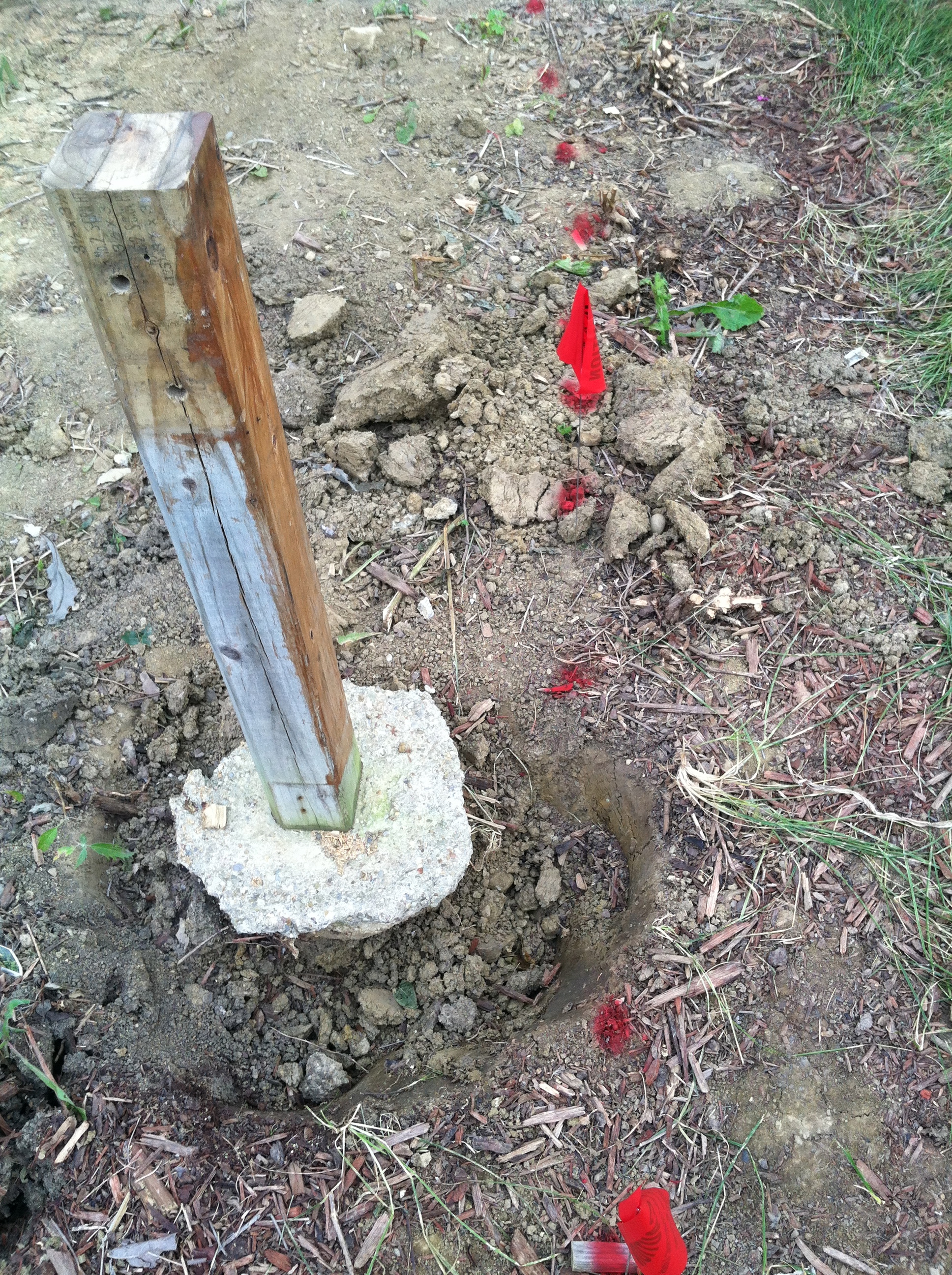
We are removing our deck in preparation for a new patio.  I offered to do the demolition because when else will it be okay for me to destroy something?  After removing the decking, I started to dig around a support post so that we could pull it out of the ground.  After 5 minutes of digging, my wife asked if we should call the utilities commission to see where the power, cable and other utility lines are buried.  I'm glad she made that suggestion because I found out after the utility lines were marked that I was digging right in the area of our electrical line.


That was close.  I will definitely be more cautious as I continue to demo the deck.  I realized I was too focused on getting the job done and I wasn't thinking about the bigger picture.  It made me think of how we educators are sometimes too narrow in our focus when we need to slow down and dig deeper into the issue.


Image


Educational research plays a large role in our lives as educators.  Our district and our building have high standards for providing “research-based” interventions for our students.  What I have learned from my teaching experience and from the research I have done recently for a quantitative statistics course is that educational research is a complicated world.  “Research-based” interventions can sound like a safe bet, but digging deeper into the research can reveal a truer picture of the research.


I have been investigating “computer-assisted instruction” and its effects on comprehension.  I wanted to look into this area because I help facilitate intervention plans for students who are struggling with a specific academic, behavioral, or social skill.  Many of the students who are referred to our team for assistance are not responding to classroom instruction, and these same students may need the instruction to be presented in a unique way.  I wanted to see if computer-assisted instruction could be a possible solution to help increase student comprehension.  Computer-assisted instruction usually refers to instruction that is guided by a computer program that responds to how a child answers questions or how a child is applying a skill that the program is teaching.  A good example of computer-assisted instruction is Khan Academy.


Here is what I found out from my research:


  1. Most of the computer-assisted instructional programs for reading focus on phonemic awareness and word solving skills.


  2. All of the studies measured aspects of phonemic awareness and showed positive gains among student in this skill.


  3. While all of the research studies I read claimed the computer-assisted instructional program they studied might improve comprehension, NONE of the studies included reliable data about the effects on comprehension (which is the ultimate goal of literacy instruction).


So, how does this impact me as someone who wants to lead a building some day?  


  • I have a responsibility to dig deeper into “research-based” claims.


  • I need to remember computer-assisted literacy instruction probably focuses only on phonemic awareness, which is only one aspect of learning to read.


  • The best way a child can improve his or her comprehension is by being immersed in quality texts that are at the child’s instructional level and when the child’s reading behaviors are being supported with explicit language from the teacher.


  • I need to remember to stay true to my belief that nothing can replace high-quality literacy instruction that is provided by an expert teacher (the kind that live and breathe).


I invite you to take a look at some of the research yourself.

https://docs.google.com/file/d/0B7pbjcf5Ua1kNEpqaHRMTzhxTnM/edit?usp=sharing